
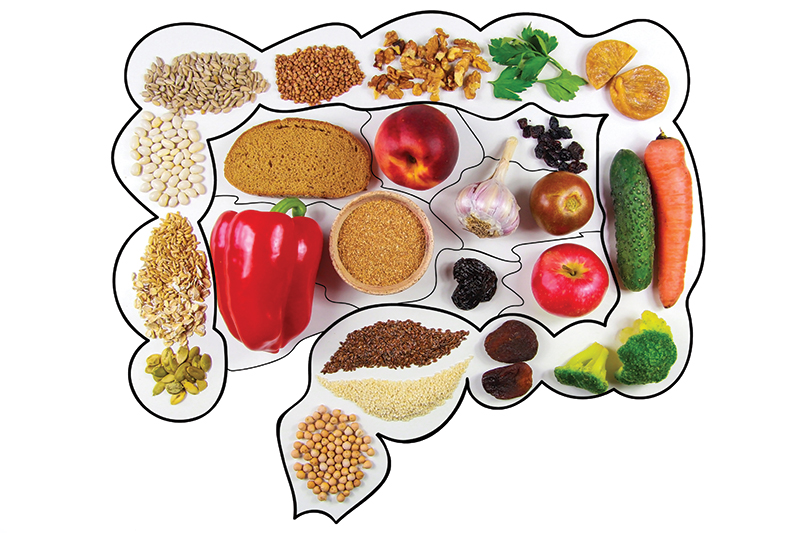
For years, we thought much of the benefit of polyphenols came from their role as antioxidants. These naturally occurring compounds, found abundantly in berries, colorful fruits and vegetables, herbs, spices, tea, cocoa, nuts, and many other plant foods, do help protect our cells from oxidative damage. Today, the science of polyphenols has become much more interesting.
We now understand that polyphenols also act as signaling compounds, influencing gene expression, inflammation, immune function, blood vessel function, metabolism, and our mitochondria, the structures within our cells that produce much of our energy and perform many other essential functions.
And there is another player in this story that may be just as important: the trillions of microorganisms living within our gut.
The Microbiome Changes the Story
We absorb some polyphenols directly from the foods we eat. But many are poorly absorbed in their original form or remain attached to parts of the plant matrix as they travel through our digestive tract. When these plant compounds reach the colon, our gut microbes go to work.
The microbiome transforms many polyphenols into smaller microbial metabolites that can be absorbed and travel throughout the body. In effect, the plants provide the raw materials, the microbiome performs additional chemistry, and the resulting metabolites become part of an extraordinary communication system between the gut and the rest of the body.
These compounds are more than metabolic leftovers. Many act as chemical messengers, influencing how our cells communicate and how different physiological systems work together.
This becomes particularly important as we age. The heart, brain, immune system, gut,
muscles, blood vessels, and metabolism are not independent systems. They are interconnected, interdependent, and constantly communicating. Polyphenols and their metabolites appear to be key players in that conversation.
From the Gut to the Brain
One of the most fascinating areas of research involves the communication between the gut and the brain. The brain does not function independently. It is influenced by our vascular health, metabolism, inflammation, immune activity, physical activity, and much more.
Microbial metabolites from polyphenol-rich foods are known to influence several of these pathways, including inflammation, immune signaling, vascular function, glucose and insulin regulation, oxidative stress, and neurotransmitter signaling.
The gut microbiome can influence the precursors involved in serotonin, dopamine, GABA, and other signaling molecules. Our microbiome can influence both neurotransmitter production and the communication between the gut and the brain.
It seems some of these metabolites protect the blood–brain barrier, the critical boundary that protects the brain. Disruption of the blood–brain barrier can occur with inflammation, metabolic dysfunction, and even head trauma, and may contribute to symptoms ranging from transient brain fog to early neurodegenerative disease.
Polyphenols and their metabolites may also increase brain-derived neurotrophic factor, or BDNF. BDNF helps brain cells grow, adapt, and stay healthy. Sometimes called “brain fertilizer,” it supports the brain’s ability to learn and form new connections, making it particularly important for memory and healthy brain aging. Two plant-based polyphenol-rich products have already been shown to raise BDNF, as have Lion’s Mane and coffee berry.
I think microbial-derived metabolites are part of the elusive mind-body connection we have long recognized but have not had the language or science to explain. It is perhaps the mechanism for our intuitions and “gut feelings”.
The Mitochondrial Connection
And then there are the mitochondria. We usually think of mitochondria as our cellular energy producers, but they do much more than keep the lights on. They are involved in metabolism, inflammation, stress responses, cellular repair, and even decisions about cell survival.
And polyphenols appear to be part of this conversation too. They and their microbial metabolites can influence how well mitochondria function, how new mitochondria are formed, and how damaged ones are cleared.
One particularly interesting example is urolithin A, a compound produced by certain gut bacteria from ellagitannins and ellagic acid found in foods such as pomegranates, walnuts, and berries. Urolithin A has attracted attention because of its effects on mitophagy, the process by which cells identify and recycle damaged mitochondria.
Not everyone produces the same amount of urolithin A after eating the same foods. The difference depends partly on which microorganisms live in the gut.
That brings us to one of the most important emerging concepts in nutrition.
The Same Food Does Not Produce the Same Response in Everyone
Two people can eat the same polyphenol-rich food yet produce different metabolites because their microbiomes are different.
This may eventually become an important part of personalized nutrition: understanding not only what someone eats but also how their microbiome processes it. But one practical lesson has already emerged: diversity matters.
Fiber and polyphenols arrive together in real plants. Fiber provides bulk and nourishment for our gut microbes, while polyphenols provide an enormous variety of additional compounds that microbes can transform. The microbiome responds not simply to how many grams of fiber we eat, but to the diversity of plant compounds it encounters.
A healthy plant-based diet isn’t built around a few perfect fruits, vegetables, fibers, or polyphenols. Variety and diversity are essential. A useful target is at least 30 different plant foods each week.
Different plants provide different fibers, polyphenols, and other compounds, creating a diverse microbial ecosystem capable of transforming them into an even wider array of biologically active metabolites.
And the relationship goes both ways. Polyphenols themselves can influence the composition and function of the microbiome. Some polyphenols support beneficial microbes while inhibiting less-desirable ones. It is a dynamic system.
From Lifespan to Healthspan
Systems biology research looks at how the many interconnected parts of our biology work together rather than studying them one at a time.
One example is MAEVE, a large NIH-funded study led by researchers at UCLA and Emeran Mayer, M.D., that explores the relationship among polyphenols, the microbiome, and healthy aging. The polyphenol-rich intervention being studied is Juice Plus+ Berry Blend, compared with placebo.
The researchers are studying 300 cognitively healthy adults over age 50 with a strong family history of Alzheimer’s disease over the course of a year. The study will measure gut health, the microbiome, and the polyphenol metabolites it produces over time. They are also studying glucose regulation, metabolic health, energy metabolism, physical activity, fitness, inflammation, and many cardiac biomarkers. They are performing detailed cognitive testing and examining the brain with MRI.
This study and others like it aim to understand the complex interrelationships that shape our biology.
Healthy aging is not simply avoiding dementia, cardiovascular disease, diabetes, or frailty one disease at a time. It is maintaining the resilience of an interconnected biological system.
Muscle helps regulate glucose metabolism, while metabolism and inflammation are closely intertwined. Vascular health touches every cell in the body. The microbiome is in constant communication with the brain and immune system, while our mitochondria influence cellular function and provide the energy that powers it all.
Microbial metabolites from polyphenols may be part of the biological language through which these systems communicate.
Optimal Gut Health to Change Your Life
We started by thinking about polyphenols primarily as antioxidants. Then we discovered that they are also signaling compounds.
Now we are beginning to understand the remarkable relationship between the plants we eat, our microbiome, the metabolites it produces, and the constant chemical messages traveling throughout the body.
Ultimately, the practical message may be surprisingly simple: An essential and underappreciated component of healthy aging is optimizing gut health. Protect and feed your microbiome by eating both a large amount and a wide variety of plants every day, especially those rich in polyphenols, such as berries, grapes, colorful fruits and vegetables, herbs, spices, tea, cocoa, nuts, and seeds.
Tamara Sachs, MD, is a Mount Sinai–trained internal medicine physician with more than three decades of experience helping people address the underlying drivers of chronic illness. Her work in functional and longevity medicine also focuses on helping people age well, preserving strength, vitality, and independence. With a background spanning molecular biology, internal and emergency medicine, clinical nutrition, and functional medicine, she translates complex science into practical strategies for better health and longevity. www.tsachsmd.com
COMMENTS