
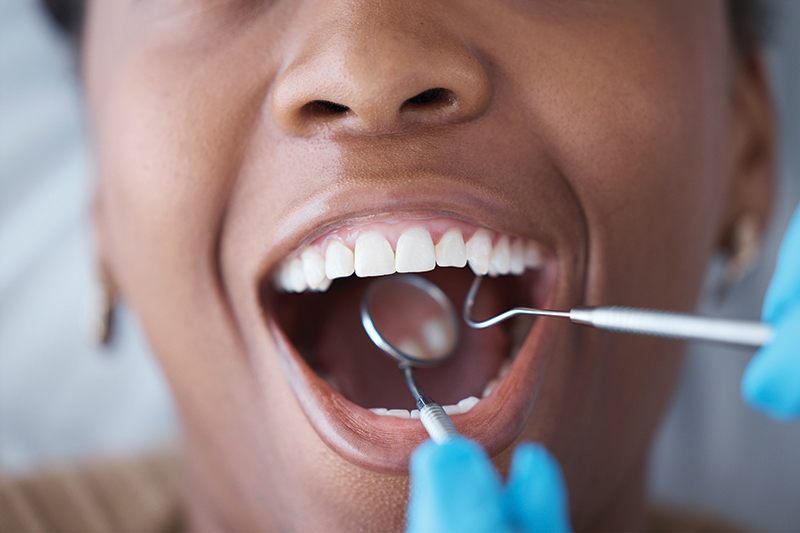
The term holistic dentistry is used more and more today. However, if you ask 10 dentists or health practitioners what it means, odds are you will receive 10 different answers. For some, holistic dentistry means avoiding mercury fillings, avoiding fluoride, or recognizing the importance of nutrition. For others, it means treating periodontal disease or understanding the relationship between oral health and systemic health at a superficial level; for example, diabetics are more prone to cavities. All of these can be important pieces of the puzzle, but for me it goes far beyond that.
After decades of practicing and developing what I call Whole-Body Dentistry, I have come to see dentistry from a much broader perspective. The mouth is not an isolated collection of teeth, gums, bones, and fillings. It is part of a living human being, a person with a physical body, an energetic system, emotions, inherited tendencies, environmental exposures and, very importantly, a unique, individual way of responding to illness.
If one wants to practice truly holistic dentistry, I believe we have to ask a larger question: what is happening to the whole person?
The mouth is part of the body. This sounds obvious. Yet much of conventional dentistry has historically treated the mouth almost as if it were detached from the rest of the patient. A tooth hurts? Do a root canal. A cavity appears? Fill it. The gums bleed? Treat the gums. Cold sores come often? Too bad!
These interventions may be necessary, but they do not necessarily answer another important question: what is happening in this particular person? Two people can eat similar diets, brush with the same toothpaste, and have similar oral hygiene habits, yet one develops recurrent cavities, and the other does not. Why? Why does one patient’s periodontal condition progress rapidly while another person’s remains stable? Why does a root canal have profound systemic effects on one person yet not on another person?
Physical and Nonphysical
Human health exists on more than one level; there is obviously a physical level where we need to evaluate teeth, e.g., bone, tissues, occlusion, infections, airway, dental materials, and other measurable factors. We need good diagnostic and excellent clinical dentistry. However, there are also non-physical or energetic levels. This is where my approach differs significantly from that of many practitioners who use the term “holistic dentistry.”
Over the years, I have incorporated energetic testing into my patient evaluations. I use it as one component of a broader clinical assessment to explore relationships that may not be apparent when we look only at a tooth or an X-ray. I also incorporate homeopathy into my treatment. Homeopathy, particularly constitutional homeopathy, asks us to look at the individual rather than simply at a diagnosis. Two people with the same conventional diagnosis may present very differently and, from a homeopathic perspective, may require completely different approaches. The patient’s physical symptoms matter, but so do the peculiarities. What makes the symptom better? What makes it worse? What food does a person crave? How is their sleep? How do they respond emotionally? Instead of asking what disease or diagnosis this person has, we begin by asking who the person with this disease is. This distinction is fundamental to my concept of holistic dentistry.
When Cavities Aren’t Just About Cavities
Consider an 18-year-old college student whom I will call Isabel. Isabel came to my office because her mother wanted her checked for cavities. On the surface, this sounds like one of the most natural reasons imaginable for visiting a dentist; however, Isabel said something that immediately raised a bigger question. “I always get cavities, even though I brush and floss religiously.” Her diet was very good, her mother being very much into nutrition. Upon examination, it was obvious that Isabel was very conscientious about her oral hygiene. Yet when I examined her, there were several new cavities again. A conventional approach would have ended with filling the cavities, possibly providing fluoride treatments, and scheduling the next exam appointment. But the real question is: why did this seemingly healthy 18-year-old continue developing decay?
The Clues Began to Accumulate
Isabel had significant reactions to dairy and gluten. When she ate either of these, she could become nauseated and extremely bloated and would feel terrible, not just physically, but also emotionally; yet she intensely craved the very foods that made her feel worse. She also had a powerful craving for sweets, which interestingly, became even stronger when she eliminated gluten from her diet. Alcohol produced another unusual reaction. Even a small amount could trigger tremendous anxiety. She described the feeling as though “the world was coming to an end.” Then there were her menstrual symptoms. Her PMS was very severe and was accompanied by considerable bloating. She also experienced chronic nosebleeds and often developed a canker sore on her lower lip. What do these things have to do with cavities? If we separate the body into specialties, Isabel could potentially have been viewed as a collection of unrelated problems: the dentist treats the cavities, the gastroenterologist investigates the bloating and food reactions, the gynecologist addresses the PMS, and another practitioner considers the anxiety.
Instead of focusing exclusively on Isabel‘s cavities, I looked at the totality of her presentation. Energetic testing was incorporated into my assessment, and I evaluated her constitutionally from a homeopathic perspective. The objective was not simply to find something that would treat cavities; it was to identify an approach directed toward Isabel as a whole person. She was given a single homeopathic remedy that I believed best corresponded to her overall constitution and symptoms. Three months later, Isabel returned; her response was striking: “Homeopathic treatment has changed my life!” Isabel’s energy had increased significantly. She was more focused in her college studies. Emotionally, she described herself as feeling positive and happy. Her food and alcohol reactions were improving. She no longer had her PMS symptoms. No nosebleeds. What had begun as an appointment about cavities had revealed something much larger. The mouth had provided a doorway into understanding the person and the underlying cause of constant cavities. Two years later, Isabel still has no new cavities.
Dentistry as Part of Good Health
My approach does not mean we ignore dentistry. Quite the opposite. The case still needs to be evaluated appropriately and treated. Infections must be addressed; periodontal disease requires attention; occlusion, airway, nutrition, and dental materials matter. Good holistic dentistry must be good dentistry; it just should not end there.If we restore every tooth beautifully while ignoring the person those teeth belong to, have we really practiced holistically? I think of this approach as whole-body health restoration. Sometimes a dental component may be the dominant issue, while at other times the mouth may be just one manifestation of a much broader imbalance. The challenge is determining which pieces of the puzzle matter for that particular patient.
After decades in this field, I have learned not to assume that the most obvious symptom is necessarily the source of the problem. Tooth pain may actually be due to a problem in an associated organ. I want to know what I can see clinically, radiographically, and diagnostically, but I also want to understand the pattern running through the person and the energetic connections of teeth to specific organs and tissues. Isabel’s cavities were real. They needed dental attention, but Isabel was more than just her cavities. Her mouth, digestive reactions, cravings, menstrual symptoms, nosebleeds, emotional responses, and low energy were all occurring in the same human being.
For me, this is what holistic dentistry ultimately means: not simply removing mercury fillings, not simply stopping the use of fluoride, not playing spa music, not merely using the word biological, holistic, or natural-it means refusing to separate the mouth from the body or the physical person from the energetic person. It means asking why. It means looking for connections. It means considering the terrain in which that problem developed, and sometimes, as happened with an 18-year-old college student who could not understand why she kept getting cavities, the most ordinary dental complaint can become the first clue to something much bigger. This is Whole-Body Dentistry.
Dr. Mark Breiner is a pioneer in the field of holistic dentistry and author of the best-selling book, Whole-Body Dentistry. His practice is located in Fairfield, CT. For more patient stories, join Dr. Breiner’s Substack: Dr.MarkBreiner@WholeBodyDentistryBeyondtheTooth.