
Stress is not simply an emotion, a demanding schedule, or a failure to cope. It is a whole-person physiologic response involving the brain, autonomic nervous system, endocrine signaling, immune function, sleep, digestion, cognition, and behavior. In the short term, the stress response is protective: it mobilizes energy, sharpens attention, and prepares us to meet challenges. When activation becomes frequent or prolonged without sufficient recovery, however, the body may remain organized around vigilance. We may notice muscle tension, irritability, fatigue, disrupted sleep, digestive changes, racing thoughts, reduced concentration, or a sense of being disconnected from ourselves.
Even when the external stressor has passed, the nervous system may continue behaving as though something is wrong. Learning to recognize these patterns is an important first step toward helping the body move from chronic vigilance into greater regulation and ease.
As a Nurse Practitioner, Advanced Holistic Nurse, and Integrative Health and Wellness Nurse Coach, I understand stress management not as the elimination of every stressor, but as the cultivation of greater regulatory capacity. The essential question is: How can we help the nervous system recognize safety, complete activation cycles, and return more readily to homeostasis?
Repatterning the Body’s Response
At ECLIPSE Holistic Living, we approach stress through the interconnected dimensions of heart, mind, body, soul, habitat, and community. This whole-person framework honors both measurable physiology and lived experience. Evidence supports multimodal stress care: regular movement, adequate sleep, nourishing food, supportive relationships, mindfulness-based practices, and paced breathing can strengthen resilience and improve perceived well-being. Daily practices are most effective when individualized, repeated consistently with intention, and integrated into activities of daily living.
From a nursing lens, functional and holistic nursing assessments consider what may be sustaining the stress response: Pain, caregiving demands, loneliness, workplace strain, financial pressure, trauma history, medication effects, hormonal transitions, blood-sugar instability, sleep disorders, and excessive stimulant use. The nurse offers stress care by remaining curious and compassionate, listening with heart, and meeting the client wherever they are on their healing, growth, and recovery journey toward well-being and wholeness.
Stress Care Modalities
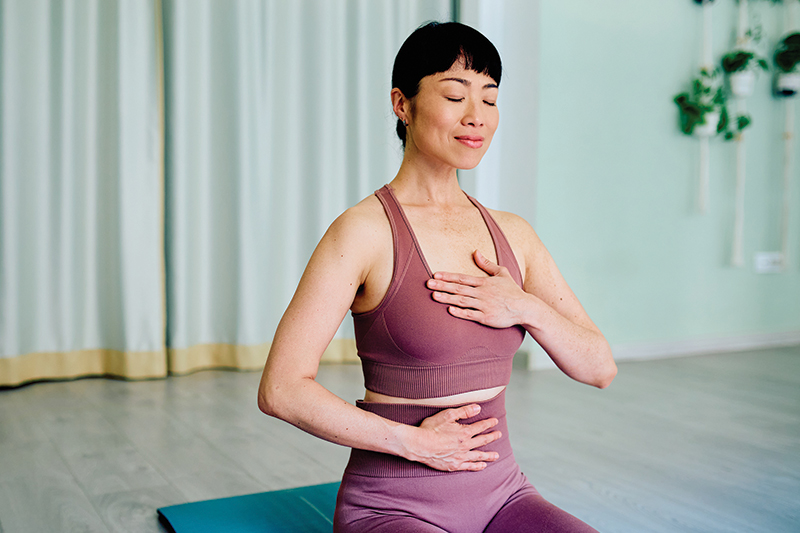
- Breathwork is one of our most immediate points of access. A gentle, unforced exhalation that is slightly longer than the inhalation may support parasympathetic activity and create a felt sense of settling.
- Mindfulness and guided meditation develop the capacity to observe thoughts, sensations, and emotions without becoming completely organized by them.
- Yoga and creative, expressive movement unite breath, interoception, mobility, and embodied awareness.
- Sound meditation with crystal singing bowls offers another doorway into restorative care. Frequency, tone, silence, and coming into coherence can support relaxation, while the experience of receiving sound in community may deepen presence and a sense of belonging.
- Reiki – informed self-care uses stillness, gentle touch or non-touch, and intention as a contemplative relaxation practice.
- Nature is a powerful co-regulator. Stepping outside, orienting to the horizon, feeling the ground beneath the feet, and noticing light, temperature, wind, or birdsong interrupts the narrowing of attention that often accompanies stress.
Community practices, caring circles, mindful classes, recovery-based gatherings, and shared reflection remind us that regulation is not solely an individual responsibility. Human beings heal in relationship: by being listened to, witnessed, supported, and welcomed as they are.
Intention
Sustainable self-care does not require an elaborate routine. Begin with small, repeatable moments: before reaching for your phone, place one hand on the heart and take five slow breaths; drink water and seek morning light; pause between appointments to unclench the jaw and lower the shoulders; choose ten minutes of walking, stretching, yoga, meditation, or quiet sound; eat one meal without multitasking; and create a consistent evening transition that reduces stimulation before sleep.
Ask yourself, “What is my body communicating?” and “What would support look and feel like for me right now?”
Stress management becomes less about controlling life and more about restoring relationship with the breath, the body, the natural world, our inner wisdom, and one another.
ECLIPSE HOLISTIC LIVING
At ECLIPSE Holistic Living, a co-creative healing arts studio space in Glastonbury, this is our sacred journey: learning to notice when we have moved away from heart center and practicing, with compassion, how to return to self. Not perfectly, just one conscious breath, one embodied choice, one intentional moment at a time. You belong at ECLIPSE!
Melissa Wooldridge Breton is a board-certified Family Nurse Practitioner, Advanced Holistic Nurse, and Integrative Health and Wellness Nurse Coach, and the founder of ECLIPSE Holistic Living in Glastonbury, Connecticut. You are personally invited to a complimentary discovery session with Melissa at 860.614.7588
ECLIPSEHOLISTICLIVING.COM
COMMENTS