
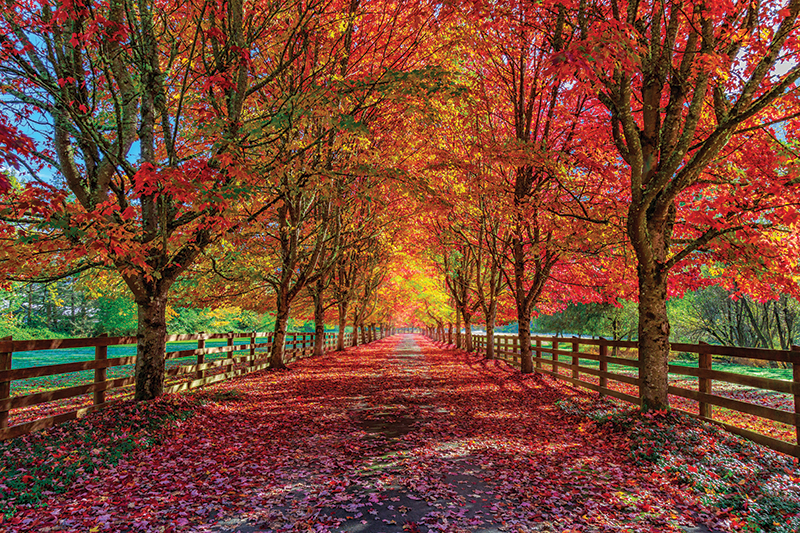
What the trees know, and we seem to forget, is that there is a time to let go.
Every autumn, the natural world begins a quiet retreat. The days grow shorter. Gardens that were overflowing just months ago begin to empty. Trees release the leaves they spent an entire season growing, without resistance or apology. There is no frantic attempt to hold on to what was. Nature simply responds to what the season requires. Humans, on the other hand, aren’t particularly good at this.
We expect the same energy, productivity, and enthusiasm from ourselves year-round. Our calendars don’t change because the sun sets earlier. Deadlines don’t soften when daylight disappears. We keep working, exercising, socializing, caring for others, and moving through our endless lists as though November should feel exactly like June. But our bodies know the difference. Changes in daylight affect our circadian rhythms and sleep-wake cycles, and we may notice a natural pull toward more sleep, quieter evenings, or a slower pace as the seasons shift. Persistent changes in mood or energy deserve attention, but perhaps not every desire to turn inward is a problem to solve. What if we’re not supposed to feel exactly the same all year?
Release
There may be wisdom in allowing ourselves to become a little more seasonal. Fall offers an especially useful lesson because it isn’t simply a season of slowing down. It is a season of release. Trees don’t carry every leaf they’ve ever grown into winter, and yet many of us carry years’ worth of accumulated obligations, expectations, identities, and relationships simply because they once belonged to us.
Sometimes what we’re carrying isn’t wrong. It’s just complete.
That realization can be surprisingly freeing. We don’t always need a dramatic reason to move on. Sometimes recognizing that a season has ended is reason enough.
A commitment may have made perfect sense when we made it. A habit may have helped us through a particular chapter. A relationship may have changed. An identity that once felt entirely authentic may no longer fit the person we’ve become. Completion isn’t failure, and letting something go doesn’t erase the value it once had. There is also a practical relationship between carrying less and experiencing less stress. Every unfinished obligation, unwanted commitment, and internal “should” demands attention. Individually, they may seem small. Collectively, they become weight.
Of course, releasing something creates another challenge: empty space. We humans aren’t terribly comfortable there, either. We want to know what comes next. We leave one job and immediately need a five-year plan. We end one chapter and rush to name the next. We clear something from the calendar and somehow fill the space before the ink has dried.
The Stillness of Nature
Nature isn’t nearly as impatient. After the leaves fall, the branches remain bare for months. Nothing immediately replaces what was released. Winter comes before spring. Perhaps there is medicine in that in-between space, too…a season when we don’t have to know what will grow next. A little room to listen before deciding what deserves to enter.
This feels particularly relevant as autumn begins its march toward the holidays. As the natural world grows quieter, our cultural world gets considerably louder. Invitations arrive. Traditions return. Shopping lists grow. Family expectations surface. We add and add, then wonder why, by January, so many of us feel depleted.
What might happen if, before all of that begins, we asked a different question? Instead of “How will I manage everything?” perhaps we ask, “Does everything still need to come with me?”
Maybe stress reduction isn’t always about adding another practice, supplement, meditation, or wellness ritual to an already crowded life. Sometimes the most therapeutic thing we can do is subtract. There are seasons for growth, movement, and expansion, and there are seasons when less is exactly what is called for.
The trees seem to understand this instinctively. They release what they no longer need to carry. They become still. They spend an entire season looking like they’re doing very little at all, and they don’t rush to fill the empty branches.
Perhaps this fall, neither should we.
Rev. Joy M. Perugini is a Conscious Movement & Energy Medicine Practitioner, Ordained Minister, and Shaman who has spent more than 30 years helping people reconnect with their bodies, reclaim their energy, and create meaningful transformation. As the founder of Vibe Worldwide, a Center for Movement & Healing Arts in Plainville, Connecticut, she blends yoga, movement, energy medicine, and spiritual practices to support whole-person wellness and authentic living.
COMMENTS