
As the warmer months arrive in New England, many of us are drawn outside to our gardens, relax on our patios, or simply reconnect with nature. Our outdoor spaces can be more than just places for recreation. They can become restorative environments that support wellbeing. By applying the principles of Feng Shui, an ancient practice of arranging environments to promote balance and the flow of energy, we can design gardens and even small outdoor living areas that foster balance, beauty, and healthy energy flow. Gardens naturally contain the elements I seek to balance when working on exteriors – wind, water, plants, sunlight, and earth – making them ideal spaces for cultivating positive energy, or chi.
The heart of energy-conscious design is the idea that chi should flow gently and freely through a space. In the garden, this flow can be influenced by the placement of natural or paved pathways, plants, and outdoor features. Rather than straight, rigid walkways, curved garden paths are often recommended. Softly winding paths slow the movement of energy and create a sense of discovery as you move through the landscape.
Equally important is reducing clutter. Outdoor areas can accumulate unused pots, tools, or broken furniture, interrupting the flow of energy. Clearing these items not only refreshes the space energetically but also improves safety and ease of movement.
Balancing the Elements
Mindful landscape design also emphasizes balance among the five natural elements: wood, fire, earth, metal, and water. Gardens already contain many of these elements, but intentional placements and selection of objects can enhance their presence.
Here are some ways to incorporate them:
- Wood appears in trees, shrubs, and structures such as fences, pergolas, and raised beds.
- Earth is represented through soil, stone pathways, flowers, and clay planters that ground the landscape.
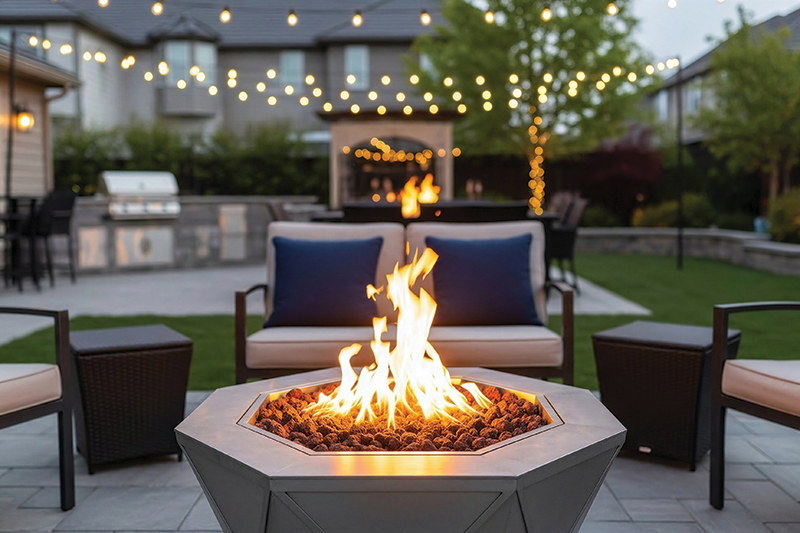
- Fire energy can be introduced through lanterns, candles, red geraniums, or any other red flower, and through fire pits that encourage gathering, conversation, and warmth.
- Metal may appear in sculptures, wind chimes, patio furniture, or decorative planters, adding brightness and clarity.
- Water can be represented with fountains, birdbaths, pools, and ponds. Flowing water is believed to attract prosperity and vitality while creating a calming sensory experience.
Plants play a central role in shaping the garden’s energy. Healthy greenery symbolizes growth and renewal, while flowering plants invite pollinators and birds, bringing vibrant life to the landscape. Energy flows better with plants with softer, rounded leaves because they promote gentle energy, though diversity in the garden is beneficial for the local ecosystem. Be careful with cacti and other thorny vegetation. While they can offer an interesting aesthetic, it is best not to place them near entrances and walkways as they can impede the smooth flow of energy.
Lighting and Seating
Outdoor seating areas are another opportunity to create harmony and even utilize the energy of color! It is often recommended that seating have a sense of support behind it, such as a hedge, stone wall, fence, or tree, while remaining open in front. This fosters a feeling of comfort and protection, while allowing the garden to unfold visually ahead. Bold colors in fabrics and pillows can make a space feel more yang and vibrant. Choosing neutral fabrics will infuse a sense of calm and yin energy.
Lighting can further enhance the energy of the space. Soft solar lights along pathways, warm string lights above a patio, or lanterns placed among plants can extend the use of the garden into evening hours. Gentle lighting creates an inviting atmosphere while maintaining a sense of calm.
Thoughtful Landscaping
Where Lyme disease is prevalent, thoughtful landscaping can also support a healthier outdoor environment. Practices such as keeping grass trimmed, creating clear walking paths, and removing leaf litter or dense brush around frequently used areas can help reduce tick habitat while maintaining a beautiful garden. Gravel or wood-chip pathways create pleasant transitions between spaces while forming natural boundaries between lawn and wooded areas. These design choices not only support Lyme awareness but also align with Feng Shui principles that emphasize clarity, order, and smooth movement through the landscape.
Finally, consider creating small intentional spaces within the garden. A bench beneath a tree, a quiet meditation corner where you can place spiritual statues or deities to call in their energy and protection. A small water feature can become a place for reflection and restoration. These moments of pause remind us that outdoor spaces are not just landscapes to maintain, they are environments that nourish our mental and physical well-being.
Harmonious outdoor design encourages us to observe nature more closely and work in partnership with it. By designing outdoor spaces that support the flow of energy, promote ecological balance, and encourage mindful enjoyment, we can create gardens that feel both peaceful and vibrant.
With thoughtful adjustments, any backyard or patio can become a place where harmony thrives, and nature supports our well-being.
Mary Grace Peak is a certified Feng Shui Consultant, Interior Stylist, Reiki II practitioner, and Founder of Mary Grace Peak and Co. Her work blends energetic healing with intuitive design, helping clients create aligned, soul-nourishing spaces that support personal evolution. Through private healing and decor consultations, sacred space styling, and a curated wellness shop exclusive to clients, she guides individuals ready to transform not only their environments but also their lives.
Learn more at: energyandgracedesigns.com.