
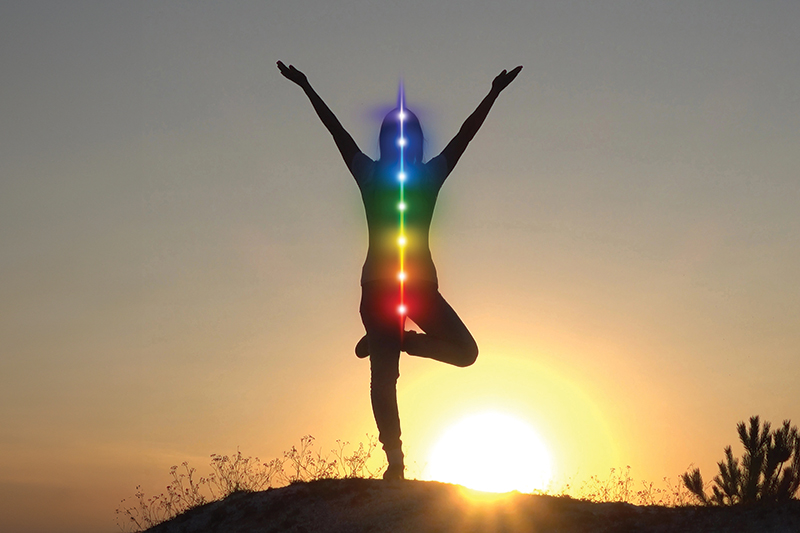
As a nurse practitioner who has spent decades practicing medicine, I have come to believe that healing is far more than prescribing medications or treating symptoms. True healing occurs when we address the whole person – body, mind, and spirit. Throughout my career in internal medicine, functional medicine, and the treatment of chronic inflammatory illnesses, I have witnessed something profound: many patients are not only physically exhausted but also energetically depleted.
Modern medicine excels in emergency interventions and lifesaving technology, yet it often overlooks one of the most important aspects of human health – the individual’s energetic and emotional state. Patients today are carrying immense burdens: chronic stress, trauma, inflammation, environmental toxicity, disconnection, and emotional pain. These burdens manifest physically in ways that laboratory tests do not always capture.
The Power of Energy Healing
Many years ago, I experienced this personally. I was in an unhealthy marriage, and my stress levels were off the charts. My body remained in a constant state of fight-or-flight, and eventually it reacted. I suffered from chronic migraine headaches, developed a blood-clotting disorder, experienced a stroke at just 26 years old, and developed cancer at 38. I found myself trapped in the medical merry-go-round – doctor after doctor, searching for answers while feeling increasingly disconnected from my own body.
Those experiences changed me profoundly. They led me toward the integration of energy healing, yoga, meditation, and nervous system regulation, not only in my professional practice, but in my personal life as well. Today, at 62 years old, I am healthier, stronger, and more emotionally grounded than I was in my twenties and thirties. That transformation taught me something modern medicine often overlooks: healing is not simply the absence of disease. Healing occurs when the body, mind, and spirit are finally allowed to come back into balance.
For centuries, Eastern medicine has recognized that the body possesses an energetic system that directly influences physical health. In yoga and Ayurvedic traditions, this life force is called prana. In Traditional Chinese Medicine, it is referred to as qi. While Western medicine has historically separated science from spirituality, emerging research in neuroscience, psychoneuroimmunology, and stress physiology is beginning to validate what ancient traditions long understood: chronic emotional and energetic imbalance affects the immune, nervous, and endocrine systems, as well as inflammatory pathways.
This is where yoga and energy healing can become transformational.
Yoga and Breathwork as Medicine
Yoga is often misunderstood in Western culture as simply exercise or stretching. In reality, yoga is a profound practice for the nervous system. Breathwork, movement, mindfulness, and meditation work together to shift the body out of sympathetic overdrive and into parasympathetic healing states. When patients begin practicing yoga consistently, I often observe improvements in sleep, pain levels, inflammation, digestion, heart rate variability, and emotional resilience.
Energy healing adds another layer to the healing process. Many patients describe feeling emotionally “stuck,” disconnected, numb, or chronically overwhelmed. Human beings are electrical and electromagnetic by nature. The heart produces measurable electromagnetic fields. Brain waves shift during meditation and healing states. Touch, intention, frequency, sound, and emotional connection all influence human physiology.
Trauma, chronic illness, toxic relationships, grief, burnout, and emotional suppression all create physiologic stress patterns that perpetuate inflammation. Patients take supplements, medications, antibiotics, or hormones, yet their bodies remain trapped in survival mode. Healing requires creating internal safety – physically, emotionally, and spiritually.
Yoga and Energy Healing Help Patients Reconnect with Themselves
Patients learn to listen to their bodies rather than fear them. They begin to recognize that healing is not always linear. They develop awareness of how stress, emotions, sleep, food, relationships, and thought patterns influence their symptoms. They begin to actively participate in their healing journey instead of feeling powerless in it.
This is especially important today. We are living in an era of unprecedented overstimulation and disconnection. Technology keeps us constantly activated. Social media fuels comparison and anxiety. People are exhausted, inflamed, sleep-deprived, and spiritually disconnected. As healthcare providers, we cannot ignore the emotional and energetic dimensions of wellness any longer.
Integrative medicine is not about rejecting conventional medicine. It is about expanding it. There are times when medications, surgeries, and advanced medical interventions are necessary and lifesaving. But there must also be room for therapies that restore balance, regulate the nervous system, reduce stress physiology, and reconnect patients to their inner resilience.
I believe the future of medicine will involve greater integration between science and holistic healing. We are already seeing growing interest in meditation, breathwork, vagal nerve stimulation, mindfulness, sound therapy, trauma-informed care, and mind-body medicine. Patients are seeking approaches that honor not only their physical symptoms but also their emotional and spiritual well-being. As clinicians, we must remember that healing is both an art and a science.
The human body possesses an extraordinary capacity to heal when given the proper support, environment, nourishment, and connection. Sometimes healing begins not with another prescription, but with stillness, breath, movement, compassion, and the restoration of hope.
In a healthcare system that often feels rushed and fragmented, helping patients reconnect to their own inner healing power may be one of the most important forms of medicine we can offer.
Pamela M. Cipriano, DNP, ACNP-BC, is a nurse practitioner specializing in internal medicine, functional medicine, and complex chronic illnesses, including Lyme disease, mold toxicity, and autoimmune disorders. She is the founder of The Practice of Health and Wellness in Thomaston, Connecticut, an ILADS-trained Lyme specialist, national speaker, and award-winning clinician dedicated to educating patients and providers about the hidden manifestations of tick-borne diseases.