
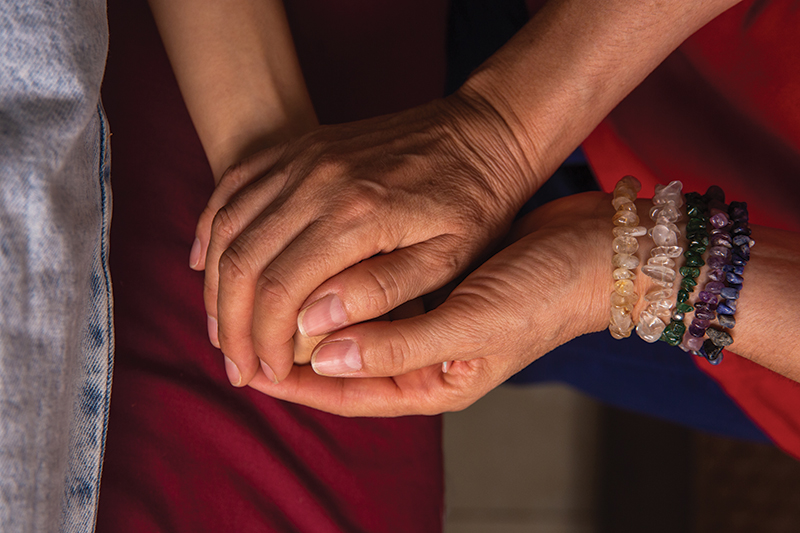
Within the evolving landscape of contemporary healthcare, nursing science continues to move beyond the reductionistic biomedical model toward a more integrative understanding of human beings as dynamic, energetic, interconnected whole-person systems. Long before the current interest in mindfulness, nervous system regulation, quantum-biofield science, and integrative healing, leading nurse theorists were already articulating frameworks that recognized consciousness, environment, and human connection as foundational dimensions of health, healing, and well-becoming.
The Influence of Nurse Theorists on Energy Healing
Nurses stand at the intersection of science, art, spirituality, and compassionate care, giving the profession a unique role in connecting evidence-informed practice with whole-person healing. Florence Nightingale, Martha E. Rogers, Jean Watson, and Margaret Newman offered perspectives on energy, environment, consciousness, caring, and systems that continue to influence holistic nursing today. At its core, nursing has always involved energetic exchange. A nurse’s compassion, awareness, attunement, and therapeutic connection can deeply shape the patient experience beyond physical intervention alone.
Florence Nightingale
Florence Nightingale, often called the founder of modern nursing, understood that environment plays a powerful role in healing. Long before modern science confirmed links among stress, immunity, and recovery, Nightingale emphasized light, fresh air, cleanliness, nutrition, quiet, and beauty as essential parts of care. Her environmental theory viewed people as closely connected to their surroundings, an idea reflected in today’s holistic, somatic, and systems-based healthcare models. Current research supports her observations, showing that calming spaces, natural light, reduced noise, and contact with nature can support nervous system regulation, mood, rest, and recovery.
Martha E. Rogers
Martha E. Rogers explored energy directly through her Science of Unitary Human Beings. She proposed that people are unified energy fields in constant interaction with the environmental field, rather than separate body systems. Her theory emphasized openness, rhythm, resonance, and dynamic patterning, encouraging nurses to view healing through presence, intentionality, pattern recognition, and environmental support. Rogers’s work helped shape holistic and integrative nursing approaches, including therapeutic touch, Reiki, meditation, sound healing, guided imagery, and biofield therapies. Her concept of resonance also connects with current research on mindfulness, breathing, sound, heart rate variability, nervous system balance, and emotional well-being.
Jean Watson
Jean Watson’s theory of human caring expanded nursing’s understanding of energy, consciousness, intentionality, and healing presence. Watson emphasized transpersonal caring relationships, authentic presence, compassion, loving-kindness, and the sacred nature of human connection. Her caritas processes encourage mindfulness, emotional attunement, stillness, and intentional care. Rather than viewing caring as a simple task, Watson presented it as an energetic and moral force that can influence healing. Current research supports these ideas, showing that empathy, therapeutic communication, emotional safety, and compassionate caregiving can affect stress, patient satisfaction, treatment adherence, and perceptions of healing.
Margaret Newman
Margaret Newman’s theory of health as expanding consciousness reframed illness as more than pathology. She proposed that health includes both disease and non-disease states and is shaped by awareness, pattern recognition, meaning, and transformation. Her theory aligns with holistic and integrative nursing frameworks that recognize the emotional, spiritual, relational, and existential dimensions of healing. Nurses often witness patients finding clarity, connection, resilience, and purpose through illness, recovery, and healing experiences. Newman’s work supports a broader view of health, one that honors human growth and the possibility of transformation even during suffering and uncertainty.
Nursing in the 21st Century
Nursing remains uniquely positioned to lead the continued evolution of whole-person care. The future of healthcare will require clinicians who can integrate science with humanity, technology with compassion, and evidence-based practice with healing frameworks that honor the whole person. Nurse theorists who pioneered these ideas were not working outside science; they were expanding what nursing science could become. Their collective work reminds us that healing often emerges through relationship, environment, intention, consciousness, connection, and therapeutic energy exchange. In this way, energy healing is not separate from the art and science of nursing; it is central to nursing itself.
Melissa Wooldridge Breton, APRN, FNP-BC, AHN-BC, HWNC-BC, MSN, RN, is a board-certified family nurse practitioner, advanced holistic nurse, functional medicine nurse consultant, integrative health and wellness nurse coach, yoga instructor, Reiki Master, and sound emissary. Her approach at her practice, ECLIPSE Holistic Living in Glastonbury, models whole-person-centered care, attending to your physical, emotional, mental, and spiritual dimensions of what health, wellness, and healing mean for you.
Visit: Eclipseholisticliving.com or call 860.614.7588 to learn more.