
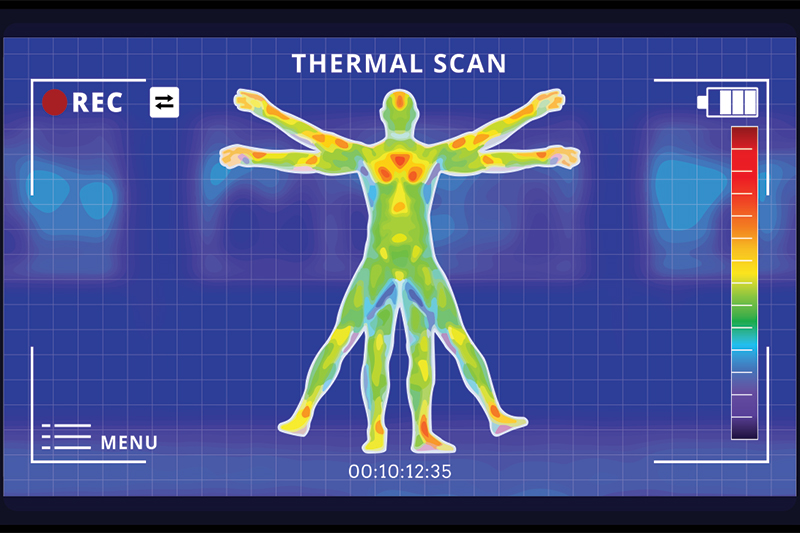
Fatigue. Pain. Brain fog. For millions of people living with autoimmune disease, these symptoms are part of everyday life – yet they often go unexplained for years. Traditional testing doesn’t always detect what’s happening in the early stages. But what if inflammation could be seen before it appears on standard tests?
This is where thermography is shifting the conversation. Thermography is a noninvasive imaging technology that detects subtle heat patterns in the body. Because inflammation produces heat, this technology can reveal areas where the body may be experiencing increased inflammatory activity. For individuals navigating autoimmune conditions – or those who simply feel that something isn’t quite right – it offers a unique window into how the body functions. And sometimes, seeing truly is believing.
When the Immune System Turns on the Body
Autoimmune diseases occur when the immune system mistakenly attacks healthy tissue. Instead of protecting the body from viruses or bacteria, it begins targeting joints, nerves, glands, skin, or internal organs. There are more than 100 known autoimmune conditions, affecting millions of Americans. Some of the most common are rheumatoid arthritis, lupus, multiple sclerosis, Hashimoto’s thyroiditis, Graves’ disease, psoriasis and psoriatic arthritis, Crohn’s disease and ulcerative colitis, Sjögren’s syndrome, and type 1 diabetes.
Although these conditions affect different areas of the body, they share one major underlying factor: inflammation. Inflammation is the fuel that drives autoimmune disease. It triggers flare-ups, causes pain, and, over time, contributes to tissue damage. The challenge is that inflammation is not always easy to measure, especially in its earlier stages.
Many people with autoimmune disease describe a long, often frustrating path to diagnosis. Symptoms may include chronic fatigue, joint pain or stiffness, brain fog, digestive issues, muscle aches, skin rashes, numbness or tingling, and sensitivity to temperature. The problem is that these symptoms overlap with many other conditions. Blood tests may appear normal. Imaging often looks for structural damage rather than early immune activity. And autoimmune diseases tend to fluctuate; one week can feel unbearable, the next manageable. Thermography introduces a unique way of looking at the body.
What Thermography Actually Sees
Thermography uses a highly sensitive infrared camera to detect temperature differences across the body’s surface. Why does this matter? Because inflammation creates heat.
When tissues become inflamed, blood flow increases and metabolic activity rises. These changes produce subtle temperature variations that can be captured and rendered as images, mapping the body’s heat patterns. Hot spots may correspond to areas of increased inflammatory activity. These patterns can help illustrate how the body may be responding internally.
What Thermography May Reveal
Thermographic imaging doesn’t diagnose disease, but it may highlight patterns of inflammation or changes in circulation. For example:
- Inflamed joints: Conditions such as rheumatoid or psoriatic arthritis may appear as warmer thermal patterns around affected joints.
- Circulatory disturbances: Some autoimmune conditions impact blood vessel regulation. Thermography may reveal unusual circulation patterns, particularly in the hands and feet.
- Nerve involvement: Certain autoimmune disorders affect the nervous system. Because nerves influence blood flow and temperature, thermography may reveal asymmetries associated with nerve dysfunction.
- Systemic inflammatory stress: In some cases, broader heat patterns may suggest the body is under overall inflammatory stress.
While thermography cannot provide a diagnosis, these insights can offer valuable clues about what the body may be experiencing.
People living with autoimmune disease often become highly attuned to their bodies. They notice how stress, diet, sleep, and lifestyle choices can influence flare-ups. Thermography offers a way to visually track those changes.
Why Some People Turn to Thermography
Thermography focuses on function rather than structure. Traditional imaging asks, “Is something damaged?” Thermography asks, “How is the body behaving right now?” For those managing autoimmune conditions, this can be especially meaningful. It offers a way to observe how inflammation patterns may shift over time, providing a more dynamic view of health.
Because it is radiation-free, noninvasive, painless, and safe for repeated use, thermography can serve as a monitoring tool. Some individuals choose periodic scans to monitor how their bodies respond to lifestyle adjustments, medical treatments, or other efforts to reduce inflammation. Thermography offers a different perspective – one that looks at physiological activity earlier in the process. For those dealing with chronic, unexplained symptoms – especially those linked to inflammation – this can be eye-opening. Many first-time patients express a similar reaction: “I had no idea my body was doing that.”
Sometimes the images validate what they’ve been feeling for years. Other times, they open the door to deeper conversations about inflammation, lifestyle, and whole-body health.
A New Way to Look at an Old Problem
Autoimmune diseases are complex, multifaceted, and often unpredictable. No single test can tell the whole story. But thermography offers something different: a way to visualize patterns in the body that may reflect inflammation. And for many people, that changes everything.
Because when fatigue, pain, and brain fog finally have something visible to point to, the narrative begins to shift. Symptoms are no longer invisible. And for the first time, what’s happening beneath the surface may finally be seen.
April Beaman, RDH, CTT, is a certified medical thermographer with the Professional Academy of Clinical Thermology and a professional member of Breast Thermography International. Beaman has worked in the wellness industry for over 15 years and provides medical thermal imaging for both women and men. She is the founder of CT Thermography, located in Farmington, with satellite offices throughout CT and MA.
Connect at 860.415.1150 or CTThermography.com.